The Human Touch
The Enduring Importance of Teachers in an AI-Driven World

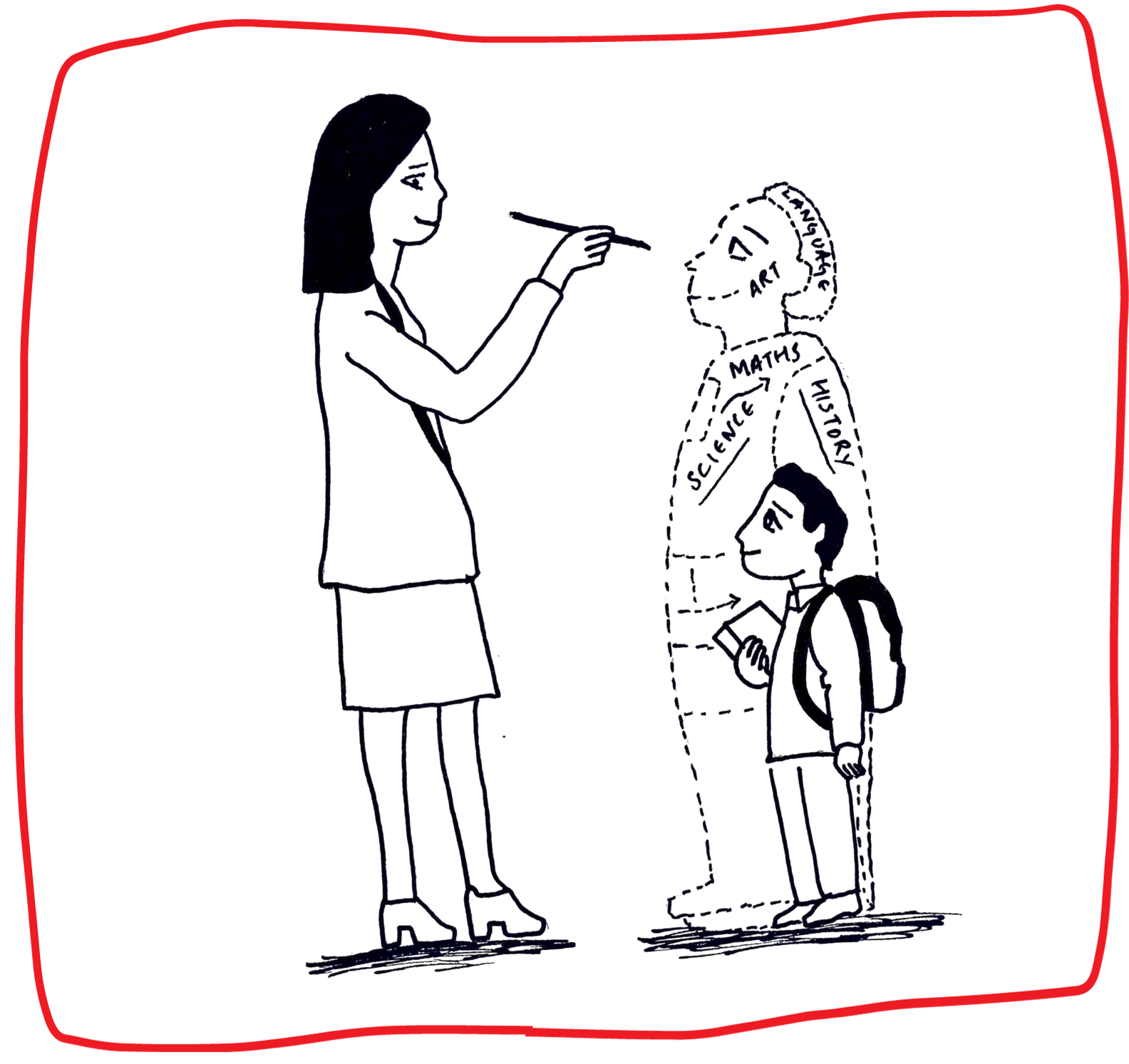
It is the year 1903.
American astronomer Henrietta Swan Leavitt has returned to Harvard where she is hired as a human computer at the university. Here, she will spend years staring at white starry blots on photographic plates. These tiny white dots are stars and she catalogs each one of them.
Being a woman those days meant she was prohibited from working with the Harvard telescopes, limiting her to just these sheets of photographic plates. This didn’t dishearten her. Through her dedicated observations she discovered that certain stars called Cepheid variables have a special relationship between how fast they brighten and dim — their period, and how bright they truly are.
This discovery will allow astronomers to use these stars as cosmic yardsticks, a universal ruler to measure the distances to other objects in space, like galaxies. It was a critical breakthrough in understanding the vastness of the universe.
It is difficult to fathom now, but in the very beginning when the word computer was used for the first time way back in the 17th century it meant: the one who computes. Through the 18th, 19th and up until the mid 20th century it was very common to use a human as a computer — a person who performs mathematical calculations.
Alan Turing famously described a human computer in this manner —
Someone who is supposed to be following fixed rules.
It wasn’t until 1943 when Europe was in the grip of war that the first programmable general purpose electronic digital computer was created. It weighed nearly 30 tons and was housed in an area of a thousand square feet. It had 17,000 vacuum tubes and was capable of performing 5000 calculations per second. This was the ENIAC — short for Electronic Numerical Integrator and Computer and it was completed in 1945. For the ten years that it was operational, ENIAC is believed to have completed more calculations than all of humanity had done before it.
It was fondly nicknamed — The Giant Brain.
Fast forward to today, and technology has gone through massive transformations and breakthroughs. Now we have computers in our pockets, and with the rise of AI we are entering an age where machines exhibit human-like behavior. Just in the past month in August, Brown University published a research paper on an experiment they have conducted, where they tasked AI Chatbots to run a software company.
The results are fascinating. They have found that the AI was able to develop the company in under seven minutes at the cost of one dollar.
The Foundation
Humans have acted as computers for themselves for a very long time, performing vast numbers of calculations. Then, with their ingenuity they created machines and devices that could perform these computational processes with precision and unfathomable speed. Over centuries these machines have advanced to such a point now that they are replacing humans in various ways, marking a remarkable reversal of roles.
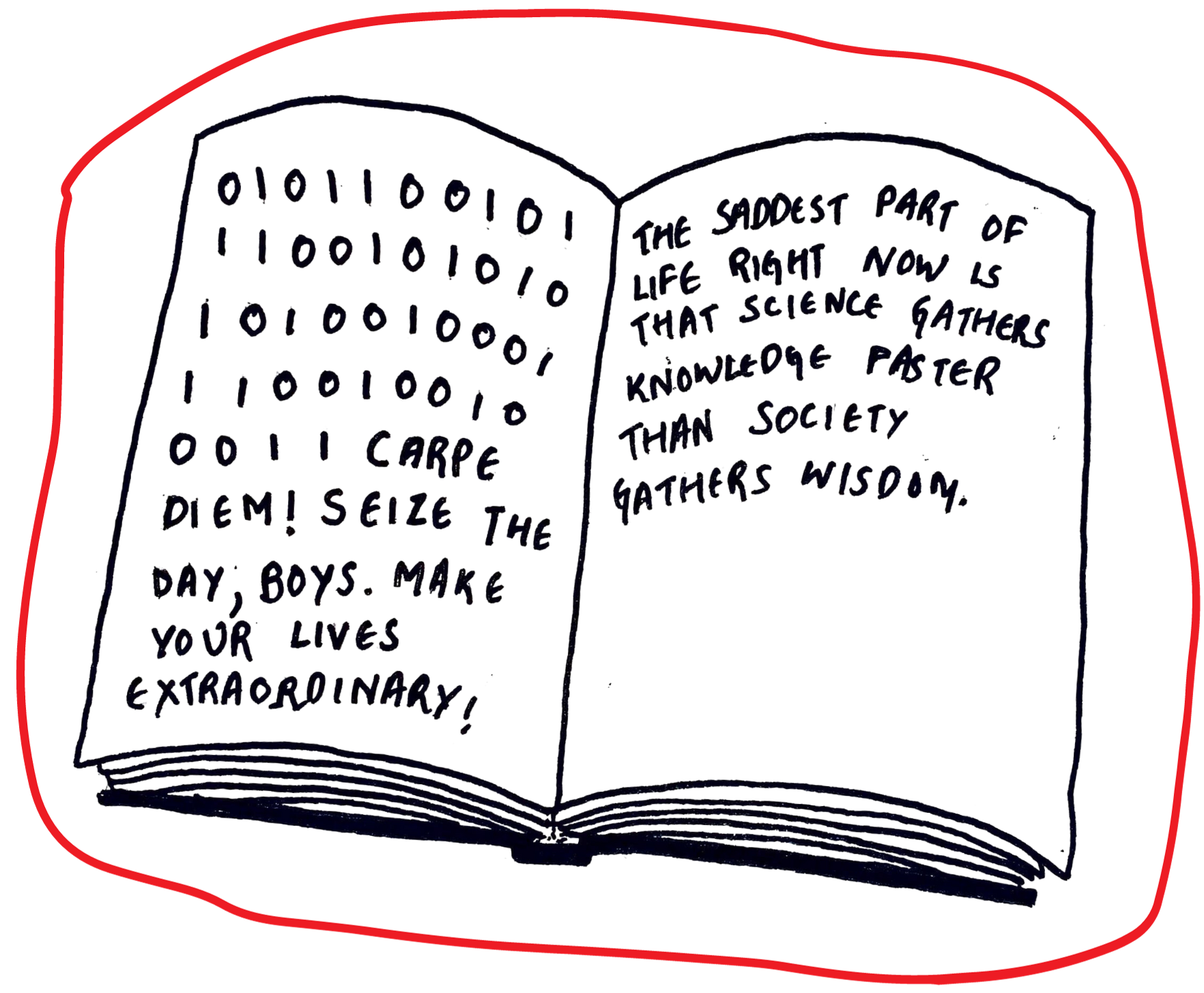
And if words could paint a thousand paintings, Isaac Asimov paints the canvas of reality with the precision of a watchmaker.
The saddest aspect of life right now is that science gathers knowledge faster than society gathers wisdom.
This timeless observation was made by Asimov in his 1988 book — Book of Science and Nature Quotations. It bears witness to the profound pace and transformative nature of science and technology, one that resonates more today than ever before.
We find ourselves at the crossroads of two titanic forces reshaping the very fabric of our existence: Artificial Intelligence (AI) and Transhumanism.
These words reverberate with an even grander vigor today than Asimov could have foreseen.
The accelerating pace of AI and technology with its exponential growth and expanding capabilities has not only illuminated the deepest mysteries of our world but also challenged the very essence of what it means to be human. The philosophy of transhumanism, driven by the belief in enhancing human capabilities through technology, has pushed the boundaries of our physical and cognitive limitations to new frontiers.
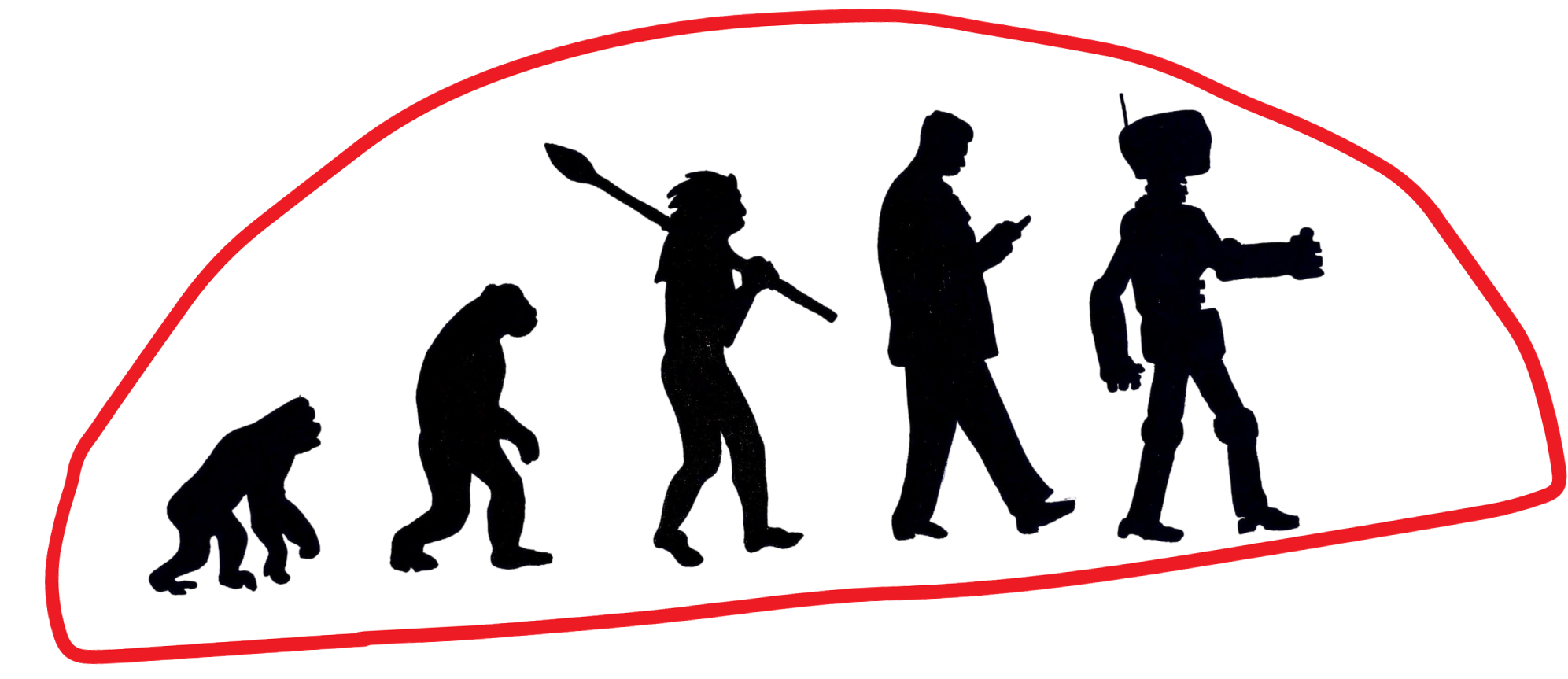
Asimov’s foresight expressed decades ago encapsulates the ever-widening chasm between our rapid technological advancements and our capacity to grapple with its implications. It also underscores the pressing need for a ground shift in the way we assimilate this knowledge in our society.
There is an urgent need to bridge the gap between the knowledge of science and the wisdom of society. I feel this change has to happen in the classroom first, the spout of most learning.
AI as a Catalyst for Change
There is no doubt that AI will play a crucial role in bridging this gap.
It holds the promise of automating administrative tasks, AI offers data-driven insights, and enables personalized instruction that is revolutionizing the education landscape. It can provide tailored learning experiences and adapt curriculum materials to individual student needs. It can offer instant feedback on performance.
This transformation promises a more efficient and data-rich educational system, where students receive targeted support and educators gain valuable insights into the progress of each student.
However, in our pursuit of a technological future it is crucial to recognize the limitations of AI in delivering a holistic educational experience. While AI excels in processing information and automating routine tasks, it cannot replace the nuanced and empathetic guidance that only a human teacher can provide.
The human touch — an intangible quality of mentorship, inspiration and emotional connection is irreplaceable.
Human touch is a survival instinct
John Keating — the new eccentric teacher portrayed by Robin Williams in the inspiring 1999 film, Dead Poets Society, embodies this essence of an indispensable human teacher.
Keating's unforgettable quote:
Carpe Diem. Seize the day, boys. Make your lives extraordinary.
It captures the central tenet of his teaching style — one that is driven by empathy, creativity and mentorship. Keating's empathetic connection with his students allows him to understand their fears and aspirations. He is igniting their creative spark as he encourages them to explore poetry as a means of self-expression. Beyond the classroom, Keating serves as a mentor. He is guiding his students toward self-discovery and self-belief. He illustrates with power that these intangible qualities are the hallmark of human educators, providing a depth of connection that the most advanced AI can never replicate.
It is not just humans who harness this power of community, empathy and learning.
A very similar intricate dance of life unfolds in the African savannah, where experienced elder elephants play a role of profound significance. These wise and battle-tested giants serve as mentors to their younger progeny. Experienced elder elephants share their knowledge of water sources, migration routes, and social dynamics with younger members of the herd.
This mentorship ensures the survival and success of the herd.
The Freedom Writer
The story of Erin Gruwell serves as one of the finest real-life examples of the impact a good and empathetic teacher can make and the life altering impact they can have on the lives of their students.
Erin’s journey to become a teacher was rooted in the captivating stories her father would tell her about the struggles of the Civil War and the inspiring tales of courageous individuals who worked tirelessly for positive societal change. As she grew up, she aspired to follow in their footsteps and pursue a career in law driven by her deep-seated passion for justice.
A pivotal moment changed everything for her.
It was the moment when she saw a young man fearlessly standing in front of a tank in Tiananmen Square. The powerful image stirred something profound within her. It was at that moment that she made her life-changing decision to become a teacher.
Gruwell taught English to 150 high risk school students in Long Beach, California during a tumultuous time marked by racial tension and violence.
Her approach to teaching transcended the traditional boundaries of the classroom. She recognized the emotional scars and trauma her students carried with them, stemming from their challenging life circumstances. Gruwell empowered her students to express their feelings, fears and hopes through writing providing them with a safe outlet to process their experiences.
Through her unwavering commitment and belief in her students' potential, Gruwell transformed a group of disengaged, marginalized youth into the Freedom Writers. She encouraged them to share their stories and write journals — fostering empathy, understanding and unity among the diverse group of students.
The Freedom Writers not only improved academically but also learned the power of their own voices in promoting social change. These journal entries was later published into the New York Times bestselling book: The Freedom Writers Diary: How a Teacher and 150 Teens Used Writing to Change Themselves and the World Around Them.
It was later adapted to a beautiful film — The Freedom Writers.
Erin Gruwell's story exemplifies how a teacher's empathy and dedication can break down barriers, heal wounds and ignite the spark of learning and self-discovery in even the most challenging of circumstances. Her legacy serves as a testament to the enduring impact of human teachers who go beyond the curriculum to nurture the hearts and minds of their students.
In a world driven by AI and technology where information is at your fingertips, a teacher like Erin Gruwell reminds us that human educators are irreplaceable in shaping the lives of students. A teacher can instill them with values, and empower them to overcome adversity.
No matter what anybody tells you, words and ideas can change the world.
Dead Poets Society
What do you think?
AI can only do what human progammes within them. It can never never have its own conscience.